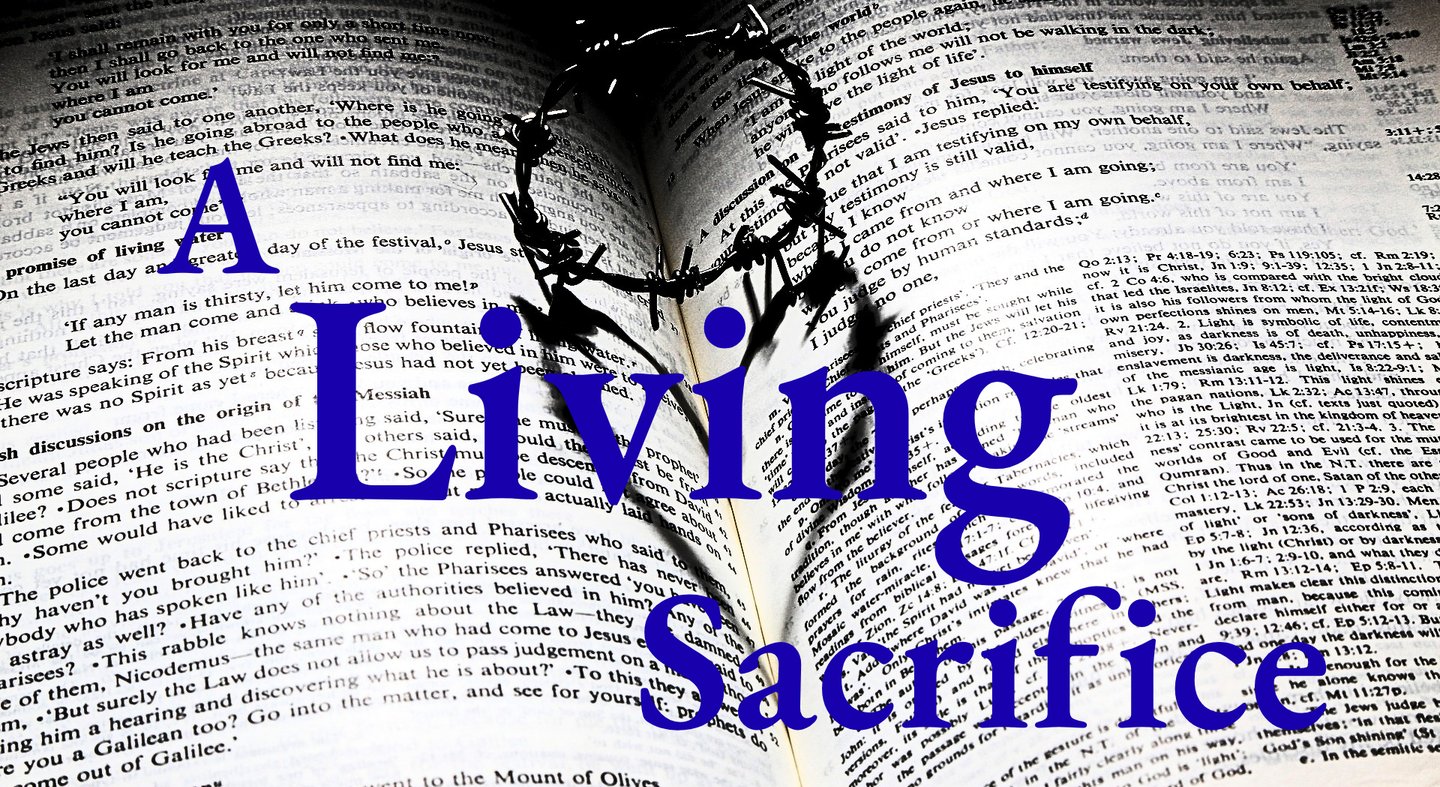
A Living Sacrifice
Blog post description.
5/7/20264 min read
Old Covenant Sacrifice
Animal sacrifice was a central element of worship, atonement, covenant relationship, and community life in the Old Testament. It is described most systematically in the books of Leviticus, Numbers, and Deuteronomy, with additional references throughout the historical books, Psalms, and Prophets.
The person bringing his sacrifice personally slaughtered the animal by cutting its throat with a sharp knife before the Lord at a designated location. The cut severed the major blood vessels, carotid arteries, jugular veins, windpipe, and esophagus, leading to rapid loss of consciousness and death. The process was bloody, visceral, and public, intentionally so, to impress upon God’s covenant people the gravity of sin, the need for substitutionary death, and God’s provision for forgiveness.
The sacrifice, to be holy and acceptable to the Lord, was meaningless without genuine repentance. Repentance could be honestly defined then, as it can be now, as:
“Doing some things differently and doing some different things.”
True repentance replaces personal preferences and old habits with God’s holy commands and disciplines.
Romans 12:1
“Therefore, I urge you, brothers and sisters, by the mercies of God, to present your bodies [dedicating all of yourselves, set apart] as a living sacrifice, holy and well-pleasing to God, which is your rational (logical, intelligent) act of worship.” (The Amplified Bible)
“Therefore, I urge you, brothers and sisters, in view of God’s mercy, to offer your bodies as a living sacrifice, holy and pleasing to God—this is your true and proper worship.” (New International Version)
New Covenant Animals
In identifying the true object of our sacrifice, it is easy and comfortable to emphasize the implications of the sacrifice rather than the literal requirement. We read this verse with the noble intention of offering ourselves in terms of what we have and what we are. The real and first prerequisite of Scripture here is to replace the Old Covenant animals with our own bodies. Before we allegorize the presentation of our bodies into wider and more diverse appreciations, it is important that we grasp the exact and authentic significance of the plain statement of the Word: “your bodies.”
The presentation of your body to become a living sacrifice invokes an interesting and disturbing picture. You are lying on your back with your head tilted in such a way as to fully expose your trachea: the most vulnerable physical position possible. It is a position of unconditional surrender, of absolute trust, and of utter dependance on the mercy of another. But this posture is “well-pleasing” to the Lord. It is a “holy” posture transcending kneeling and prostration. It is an essential and crucial decision to assume this posture for, as Hebrews 12:14 teaches us, without holiness, no one will see the Lord.
Becoming Holy Through Sacrifice
God alone is holy and His holiness separates everyone and everything from His divine presence. As you rise each morning, you must consciously and intentionally abandon the insignificant little throne of your life and present yourself as a sacrifice on His altar again. This extreme act of submission is not effortless, nor was it designed to be so. It demands that you deny yourself, (and you are the most precious person you know). It stipulates daily death and the brutal crucifixion of your passions, desires, and exposure to temptations of all manner.
It is a Relentless Challenge
For it matters not how unpleasant, inconvenient, or costly the call:
Whatever He directs you to do, you obey.
Wherever He sends you, you go.
Whenever He calls, you pick up.
You may understandably ask, “How is it possible to make a promise to live in this way? How can I honestly be relied on to consistently:
Give away what I want to keep?
Work when I want to rest?
Get up and go when I want to stay in my comfort zone?
Suffer for another when it is so easy to avoid?”
The Answer is Pivital:
If God does not amaze you, you will eventually become resentful of the living sacrifice He asks from you.
Consider Him
The first objective of Romans 12:1 is to plead with you to examine and perceive the “mercies of God.” The living sacrifice will remain a futile objective unless you read Romans chapters one through eleven! You must first fathom the truth that you were a helpless sinner sentenced to eternal death with the devil and his angels. You must accept that God in His mercy has decreed your pardon by His grace and unconditional love. In view of these certainties, the posture of sacrifice is the only logical response you can return! “God is Love.” What other reasonable reaction to that revelation should you have other than to present your body as a living sacrifice perpetually?
Jesus showed us the way in the Garden of Gethsemane as He prayed, “Not my will but Yours,” as His precious blood burst from His brow in great drops of sweat and fell into the dirt. He gave His body as the first living sacrifice when he was spat upon, beaten with rods, bludgeoned by heavy fists, scourged with thirty-nine blows from a lethal Roman whip, forced to carry a massive, unwieldy cross up Golgotha’s hill and finally, He was crucified. The long and arduous process He endured was a terrible penalty to pay, but in doing so, He obliterated every obstacle, every argument, every errant thought, and every evil intention between you and your eternity in the presence of your Almighty God.
Our Rational Act of Worship
When you offer your own body, you are aligning your life with the example of our Lord and Savior, Jesus Christ. He asks not for your ideology, your assent to His divine plans, nor for your vote of confidence. He asks for your body. Why?
You cannot radically change your life if you hold back the physical space
where all your habits, your tendencies, your obsessions, and your predispositions live.
The Living Sacrifice Begins With Your Physical Body
It is a structural alignment with the Father, Son, and Holy Spirit.
It is pleasing to God.
It is holy.
It makes sense.
Your living sacrifice is true and proper worship.
Connect
Larry@everydaygracematters.com
© 2025. All rights reserved.