A Tale of Two Surrenders
Blog post description.
4/12/20265 min read
A Conditional Surrender
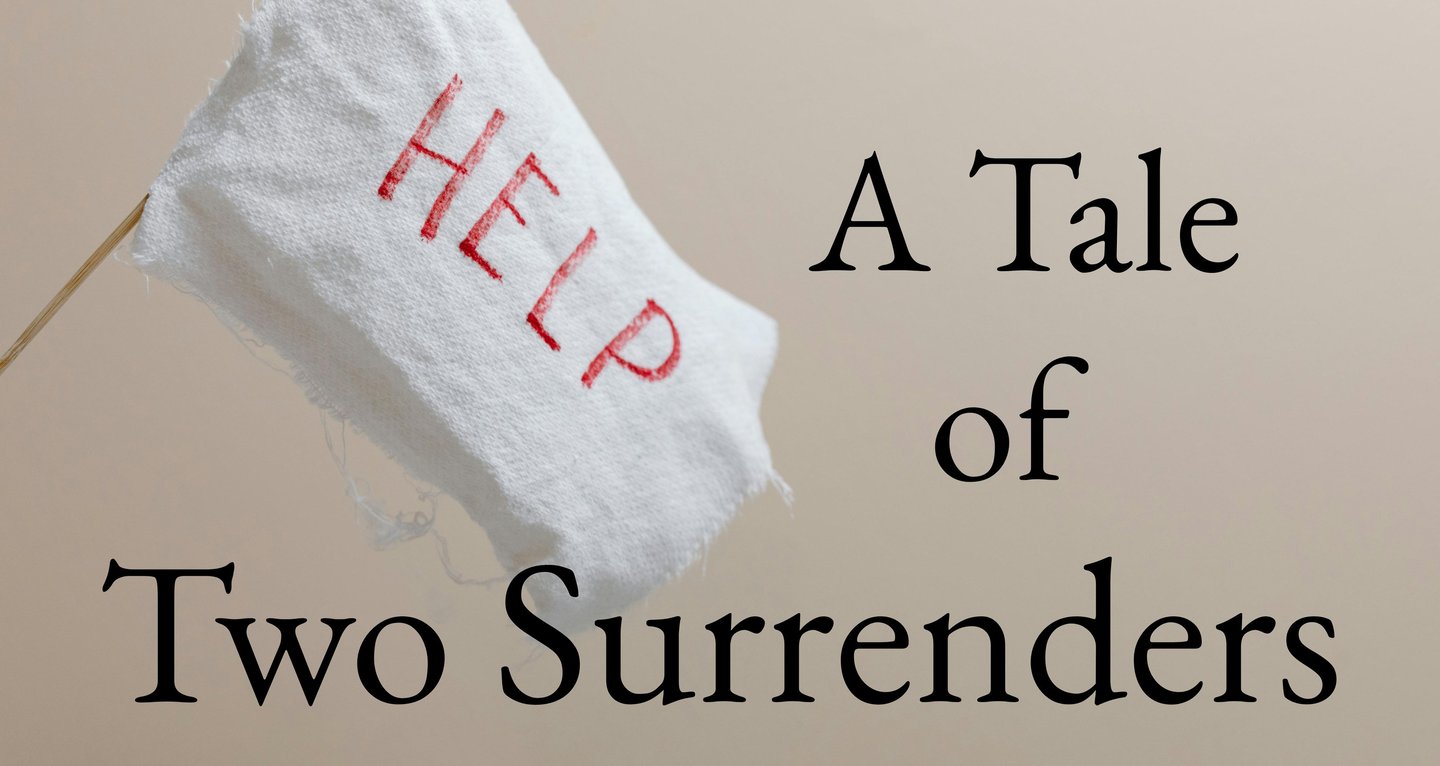
It was on August 3, 1757, when French forces under the command of Lieutenant General Lewis-Joseph de Montcalm began the siege of Fort William Henry in the strategic Lake George-Lake Champlain corridor. The British garrison of 2300 soldiers under the command of Lt. Colonel George Monro was woefully overmatched by the massive French forces and their allies.
During six days of relentless bombardment, the British guns overheated and exploded from overuse. Walls were breached. Casualties mounted. There was no hope that reinforcements would arrive. Col. Monro raised the white flag on August 9 and offered a council of war. He negotiated a conditional surrender that allowed his soldiers to march away with their possessions, bearing their arms, with their dignity intact.
The British soldiers began their retreat to the south accompanied by women and children the next day. A few miles from the abandoned fort, native American allies of the French ambushed the column and massacred hundreds. Wounded were left to die and hundreds more were taken captive to Canada and held for ransom.
An Unconditional Surrender
There were some final skirmishes for the Army of Northern Virginia on the morning of April 9, 1865. Their commander, General Robert E. Lee, facing encirclement by the Union army, overwhelming numbers, and starvation among his soldiers, requested a meeting with General Ulysees S. Grant, Union commander. The two great leaders met in the parlor of the Wilmer McLean House, a private residence in the village of Appomattox Courthouse, Virginia.
After exchanging pleasantries and sharing memories of their mutual service during the Mexican-American war, General Lee unconditionally surrendered his army leaving it to General Grant to dictate the terms. No formal document was ever signed. In a personal letter, General Grant laid out most generous terms that were accepted by General Lee’s gracious reply.
Rations were distributed immediately to the starving soldiers. No prisoners were taken, nor were there any prescribed punishments. All officers were paroled and allowed to retain their sidearms. Every man was permitted to stack arms and go home, taking their horses and mules with them for spring planting. Orders were dispatched to the victorious Union troops to refrain from boisterous cheering or celebration because their enemies had become “our countrymen” once again.
Mark 14:3-9 (ESV)
And while he was at Bethany in the house of Simon the leper, as he was reclining at table, a woman came with an alabaster flask of ointment of pure nard, very costly, and she broke the flask and poured it over his head. There were some who said to themselves indignantly, “Why was the ointment wasted like that? For this ointment could have been sold for more than three hundred denarii and given to the poor.” And they scolded her.
But Jesus said, “Leave her alone. Why do you trouble her? She has done a beautiful thing to me. For you always have the poor with you, and whenever you want, you can do good for them. But you will not always have me. She has done what she could; she has anointed my body beforehand for burial. And truly, I say to you, wherever the gospel is proclaimed in the whole world, what she has done will be told in memory of her.”
Then Judas Iscariot, who was one of the twelve, went to the chief priests in order to betray him to them. And when they heard it, they were glad and promised to give him money. And he sought an opportunity to betray him.
Another Unconditional Surrender
An unnamed woman came to Jesus and lavished her exquisite, expensive gift upon Him. The men who witnessed her offering predictably derided her and scolded her for wasting something so valuable for one single moment with Jesus. Unconditional surrender always looks ridiculous to those who stubbornly refuse it. What appeared as great loss to them was in fact unconditional love.
This was more than mere generosity, you understand, much more. This was total submission of all she possessed and all that she was in honor and worship to her Lord. The acclamation she received from Jesus because of her actions that day insured that what she had done was not only appropriate and approved but would never be forgotten wherever the Gospel story would be shared.
A Negotiated Settlement
This incident was the last straw in a long series of events that Judas Iscariot witnessed during the three and a half years he had spent as a disciple of Jesus Christ, many of which he had undervalued and some he had despised. He finally made up his mind in this critical moment to do something about it and sought to betray Jesus to His enemies. The value of his decision, the value he placed on the life of the Savior, is recorded in the Scripture: thirty pieces of silver, just enough to purchase the worthless field where he hanged himself.
Judas sought to follow Jesus, but only conditionally. Instead of complete capitulation, he sought negotiation. This approach measures salvation and service in terms of cost and benefit: “I will do this, but not that.” It decides beforehand just how far we are willing to go in honor and worship to the Lord of Hosts. It places a ceiling on the “glory due His name,” and decides which words that “proceed from the mouth of God” we will obey.
This idea is more subtle than it first appears because the notion of negotiation often disguises itself as faith and is widely taught as doctrine in many Christian circles. We are told that when we follow the prescribed precepts of prayer laid out in the Bible, we move God to deliver the results we seek. “I followed the rules and now, God, you owe me. I expect You to hand over abundance, health, success, and material goods because I worked the formula.”
Please understand. Yes, we should know and pray the revealed will of God in any given situation. Yes, we should pray consistently and persistently. Yes, we should expect remarkable things from our God who loves us, who is good and who performs the impossible for His children faithfully. However, the prayers of His faithful followers are not to be reduced to mere formulae. Unconditional surrender concedes control over outcomes to God. Unconditional surrender means absolute obedience without expectation of compensation. Unconditional surrender means trusting God with results that will work “all things together for good to those who love Him and are called according to His purpose.”
Perfect Submission
Good, noble, and well-informed Christian soldiers realize that, in earthly struggles, we are outnumbered by our foes. There is no hope in attempting to make a deal with the devil or trying to make it on our own somehow. The Rescuer has come! We are invited to simply reach out and let Him take hold on our lives without reservation: all that we have, all that we are, and all that we ever hope for released into His loving, faithful, nail-scarred hands.
Unconditional surrender.
No negotiation.
Peace in His presence for eternity.
Connect
Larry@everydaygracematters.com
© 2025. All rights reserved.